Source CE RoHS LED Bar Sign for Shops, Hotels, and Events
Compare 30 listings for CE RoHS LED bar sign options with customizable designs and LED light sources. Buyers can evaluate specifications like IP65 ratings, RGB color temperatures, and OEM services from manufacturers in China.
Key considerations
Products List




Comprehensive Sourcing Guide
Strategic Sourcing Guide for CE RoHS Compliant LED Bar Signs
The global demand for custom lighting solutions has surged, particularly within the hospitality and commercial design sectors. Buyers searching for "CE RoHS LED bar sign" are typically seeking decorative illumination that meets specific regulatory standards while offering aesthetic flexibility. This guide provides a disciplined, evidence-based approach to sourcing these products, focusing on the intersection of technical specifications, compliance verification, and supplier reliability. The analysis relies strictly on observed market data and established procurement principles to ensure actionable, risk-mitigated decision-making.
Understanding Technical Specifications and Material Composition
When evaluating LED bar signs, the first step is to dissect the technical attributes that define performance and durability. The core material for many high-quality decorative signs is aluminum, a choice driven by its thermal conductivity and structural rigidity. Aluminum housings facilitate heat dissipation, which is critical for maintaining the lifespan of LED components. However, buyers must remain vigilant as product listings may also reference "Other" materials, indicating a need to verify the specific alloy or composite used in the final assembly.
The light source is predominantly LED, often configured to offer customizable color temperatures. In the context of bar signage, RGB (Red, Green, Blue) capabilities are frequently observed, allowing for dynamic, changeable colors that enhance the ambiance of a venue. The Color Rendering Index (CRI) is another vital metric; a value of Ra 80 is commonly cited, ensuring that the light accurately renders colors within the bar environment, which is essential for food and beverage presentation.
Power consumption and efficiency are key indicators of operational cost. Typical units may operate at 20 Watts with a luminous efficiency of approximately 22 lumens per watt. The input voltage is generally standardized to AC 100-220V, ensuring compatibility with a wide range of global electrical grids. For outdoor applications, the IP Rating is a non-negotiable specification. An IP65 rating indicates that the unit is dust-tight and protected against water jets, making it suitable for exterior mounting or high-humidity environments like poolside bars. The working time for these LEDs is often projected at 50,000 hours, a figure that should be treated as an observation of typical component longevity rather than a guaranteed performance metric for every batch.
Compliance Verification and Certification Standards
The keyword "CE RoHS" implies a specific regulatory framework that buyers must verify rather than assume. The CE marking indicates conformity with health, safety, and environmental protection standards for products sold within the European Economic Area. Similarly, RoHS (Restriction of Hazardous Substances) restricts the use of specific hazardous materials in electrical and electronic equipment. While these certifications are frequently listed in product attributes, buyers must treat them as claims requiring documentary proof.
Trusted category knowledge suggests that a compliant supplier should provide a Declaration of Conformity (DoC) and test reports from accredited laboratories. The presence of "CE, ROHS and so on" in product descriptions suggests a baseline compliance, but the "and so on" qualifier necessitates further inquiry. Buyers should explicitly request documentation for REACH compliance, which addresses chemical safety, and verify if ISO 9001 quality management systems are in place, although these are often background attributes rather than product-specific certifications.
It is crucial to distinguish between the certification of the finished product and the certification of the manufacturing facility. A product may carry a CE mark, but if the factory lacks a robust quality management system, the consistency of that compliance across different production batches may be compromised. Therefore, the verification process should include a review of the supplier's quality control protocols alongside the product certificates.
Cost Drivers and Pricing Structures
The pricing landscape for LED bar signs is highly variable, with observed ranges spanning from $3 to $600 USD. This wide disparity is not arbitrary but is driven by several distinct factors. The primary cost driver is the level of customization. Standard, pre-fabricated signs are positioned at the lower end of the spectrum, while fully custom designs involving complex geometries, specific branding, or unique color profiles command premium prices.
Material costs also play a significant role. Aluminum construction, while durable, is more expensive than plastic alternatives. The inclusion of high-efficiency LEDs and robust power supplies further increases the unit cost. Additionally, the packaging method influences the final price. Products shipped in wood boxes, as observed in some listings, incur higher material and logistics costs compared to standard cardboard packaging, but they offer superior protection for delicate components during international transit.
Minimum Order Quantity (MOQ) is another critical variable affecting the unit price. Observed MOQs range from as low as 5 pieces to 1,000 pieces. Buyers purchasing small quantities, such as the 5-piece MOQ observed in some listings, often face a higher per-unit cost due to the setup and handling overheads associated with small batches. Conversely, larger orders benefit from economies of scale. The "Selling Units" attribute often indicates that these products are available as single items, which supports small-scale procurement but may limit negotiation leverage on price.
Typical Applications and Design Flexibility
The versatility of LED bar signs makes them suitable for a broad spectrum of applications. The primary usage is decoration, specifically tailored for commercial and residential settings. Common application places include buildings, shops, bars, hotels, offices, and event venues. The ability to customize the design allows these signs to serve as brand identifiers in commercial spaces or as unique decor elements in home environments.
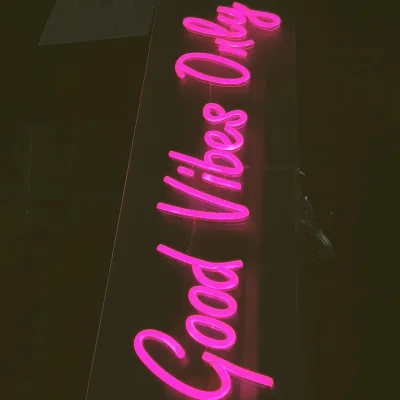
The "Custom Designs" attribute highlights the flexibility available to buyers. Whether the requirement is a specific brand logo, a custom phrase, or a unique artistic shape, the manufacturing process supports these variations. The "Customized" standard mentioned in product attributes reinforces this capability. Furthermore, the mounting type is typically wall-mounted, which is the standard for signage in bar and retail environments.
The style of the sign can vary significantly, ranging from modern bar aesthetics to specific thematic designs like hookah or milkshake motifs. This stylistic diversity allows buyers to align the lighting with the specific theme of their venue. The "Lighting solutions service" attribute suggests that suppliers may offer more than just the physical product, potentially providing design assistance or integration advice, though the specific scope of these services should be clarified during the negotiation phase.
Supplier Evaluation and Manufacturing Capabilities
Selecting the right supplier is paramount to ensuring product quality and timely delivery. The "Advantage" attribute often highlights "Own factory, product design and customization service," which is a strong indicator of vertical integration. Suppliers with their own manufacturing facilities typically have better control over the production process, allowing for faster turnaround times and more consistent quality.
Geographic origin is another factor to consider. Products are frequently listed as originating from Shanghai or Guangdong, China, both of which are major hubs for lighting manufacturing. These regions offer a mature supply chain and a high concentration of specialized factories. However, buyers should verify the specific location of the factory to ensure it aligns with their logistical preferences and to assess the potential for site visits.
The "OEM/ODM" attribute indicates that the supplier is capable of Original Equipment Manufacturing and Original Design Manufacturing. This means they can produce goods under the buyer's brand or develop custom designs from scratch. Buyers should evaluate the supplier's portfolio to ensure they have experience with similar projects, particularly those involving complex custom neon or LED lettering. The availability of design files in formats such as CDR, Igs, Eps, and others is a practical indicator of the supplier's digital workflow capabilities, facilitating smoother communication of design requirements.
Quality Control and Long-Term Procurement Considerations
Quality control should be an integral part of the procurement strategy, not an afterthought. Given the technical nature of LED products, buyers should establish clear acceptance criteria before production begins. This includes verifying the IP rating for water resistance, the CRI for color accuracy, and the luminous efficiency for energy performance. The "2-Year" warranty period observed in some listings provides a baseline for after-sales support, but buyers should negotiate terms that align with the expected lifespan of the product.
Long-term procurement considerations involve the scalability of the supply chain. As a business grows, the ability to replicate successful designs or expand the lighting inventory is crucial. Suppliers that offer "Customization" services are better positioned to support this growth, allowing for consistent branding across multiple locations. Additionally, the "Working Time" of 50,000 hours suggests a long service life, reducing the frequency of replacements and maintenance costs.
Buyers should also consider the environmental impact of their procurement choices. Adherence to RoHS and CE standards ensures that the products are environmentally friendly and safe for disposal. The use of aluminum, a recyclable material, further supports sustainability goals. By prioritizing suppliers who demonstrate a commitment to these standards, buyers can align their procurement practices with broader corporate social responsibility initiatives.
Comparative Analysis of Product Attributes
To facilitate a clearer understanding of the market landscape, the following table summarizes key attributes observed in the current product listings. This comparison highlights the variability in specifications and helps buyers identify the features most relevant to their specific needs.
| Attribute Category | Observed Specification | Relevance to Procurement |
|---|---|---|
| Material | Aluminum, Other | Determines durability and heat management. |
| Light Source | LED, RGB, Changeable Color | Affects ambiance and energy efficiency. |
| IP Rating | IP65 | Critical for outdoor or high-moisture use. |
| Input Voltage | AC 100-220V | Ensures global electrical compatibility. |
| Warranty | 2-Year | Indicates manufacturer confidence in product life. |
| MOQ | 5pcs to 1000pcs | Influences initial investment and inventory risk. |
| Origin | Shanghai, Guangdong, China | Impacts lead times and logistics costs. |
| Customization | Available, Custom Designs | Essential for branding and unique aesthetics. |
| Packaging | Wood Box | Provides superior protection for shipping. |
| Certifications | CE, RoHS (Claimed) | Must be verified with documentation. |
This table serves as a reference point for buyers to cross-reference their requirements against available market offerings. It underscores the importance of verifying each attribute rather than relying solely on product titles or brief descriptions.
In conclusion, sourcing CE RoHS compliant LED bar signs requires a meticulous approach that balances technical specifications, regulatory compliance, and supplier reliability. By focusing on the evidence provided in product listings and applying rigorous verification processes, buyers can secure high-quality lighting solutions that meet their operational and aesthetic needs. The dynamic nature of the market, with its wide range of customization options and pricing structures, offers significant opportunities for strategic procurement, provided that due diligence is maintained throughout the sourcing process.
FAQs
What materials are used for CE RoHS LED bar signs?
Aluminum is the primary material used for these signs due to its thermal conductivity and structural rigidity. Some listings also reference other materials, so buyers must verify the specific alloy or composite used in the final assembly before ordering.
Can these signs be customized for specific designs?
Yes, customization is available for custom neon and decorative letter signs with specific design requirements. Suppliers typically accept design files in formats like CDR, IGS, and EPS to facilitate the creation of unique shapes and branding.
Which certifications should I verify for compliance?
CE and RoHS are the standard certifications listed for these products to ensure safety and environmental compliance. Buyers should request documentary proof such as a Declaration of Conformity and test reports from accredited laboratories to validate these claims.
How much does a CE RoHS LED bar sign cost?
Prices observed in the market range from 3 to 600 USD depending on the level of customization and material. Standard pre-fabricated signs are cheaper, while complex custom designs with aluminum construction and specific packaging command premium prices.
What is the minimum order quantity for these signs?
The minimum order quantity varies significantly, with some listings offering as low as 5 pieces and others requiring up to 1000. Small batch orders often incur higher per-unit costs due to setup overheads associated with customization services.
Where are these LED bar signs typically manufactured?
Products are frequently listed as originating from Shanghai or Guangdong, China, which are major lighting manufacturing hubs. Buyers should verify the specific factory location to ensure it aligns with logistical preferences and to assess the potential for site visits.